

How much does All-on-4 cost in Turkey, and is it worth two trips?
All-on-4 at Denture in Istanbul costs €4,200 per arch in 2026 and All-on-6 costs €5,400, including the implants, a fixed temporary bridge, the final zirconia bridge, hotel and transfers. A UK private clinic charges about £12,000 for the same arch. You leave visit 1 with fixed teeth within 72 hours of surgery and return 3–4 months later for 4 days to fit the final bridge. Every implant carries a lifetime written guarantee.
- Price
- €4,200 per arch
- Time in Istanbul
- 5 + 4 days, 2 trips
- Implants per arch
- 4, or 6 where needed
- Warranty
- Implants for life, bridge 10 yrs
- Fixed teeth
- Within 72 h of surgery
- Healing
- 3–4 months, soft diet 8–12 wks
Key takeaways
- All-on-4 replaces every tooth in one jaw with a fixed bridge on 4 implants. It is screwed in, not glued or removable, and only a dentist takes it out.
- You are never without teeth: failing teeth come out, implants go in and a fixed temporary bridge is fitted within 72 hours, all in the first 5-day trip.
- All-on-6 adds 2 implants for upper jaws with softer bone, wide arches and heavy grinders. Your CT scan decides which you need, not the price list.
- Around 93–98% of All-on-4 implants are still working after 10 years, but this is surgery: swelling, a soft diet for 8–12 weeks and lifelong cleaning under the bridge come with it.
What is All-on-4 and how does it work?
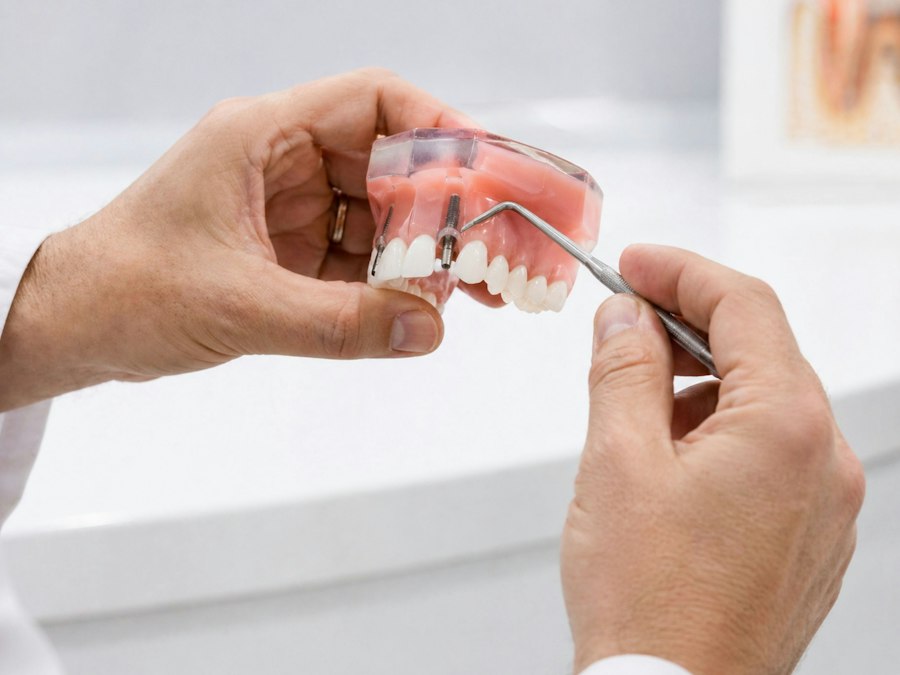
All-on-4 is a way of replacing every tooth in one jaw with a single fixed bridge supported by four dental implants. Two implants are placed upright at the front of the jaw and two are tilted backwards at up to 45 degrees, so their tips sit in the dense bone in front of the sinus (upper jaw) or the nerve canal (lower jaw).4 The tilt spreads the four implants along the arch, which lets a 12-tooth bridge be supported without implants at the very back and, in most patients, without bone grafting.2
The concept was developed by Dr Paulo Maló with Nobel Biocare in the late 1990s and now has 10 to 18 years of published follow-up.1 All-on-6 is the same idea with six implants, used when the bone allows it and the bite demands extra support.
Three parts, two trips
- Implants. Four titanium screws, usually 10–18 mm long, placed under local anaesthetic or IV sedation through a printed surgical guide. Any remaining failing teeth are removed in the same appointment.
- A fixed temporary bridge. Within 72 hours a reinforced acrylic bridge is screwed onto the implants. This is immediate loading: you eat soft food with fixed teeth while the bone heals around the implants for 3–4 months.
- The final bridge. On your second trip a monolithic zirconia bridge, milled from one block of zirconia and fitted to a titanium bar, replaces the temporary. It is screw-retained, so your dentist can remove it for cleaning or repair.
Nothing covers your palate, nothing moves when you talk and chewing force returns to close to that of natural teeth. For implant brands, bone grafting and single-tooth gaps, see our dental implants guide.
All-on-4 vs All-on-6 vs implant denture vs conventional denture
There are four ways to replace a full arch of teeth. Fixed bridges behave most like natural teeth; dentures cost less but move, and the jaw keeps shrinking underneath them.
| All-on-4Usually our pick | All-on-6 | Removable implant denture | Conventional denture | |
|---|---|---|---|---|
| Suited to | Most lower jaws and many upper jaws, even with little bone at the back | Upper jaws with soft bone, wide arches, heavy grinders | Tight budgets; happy to take teeth out at night | When surgery is not possible |
| Implants per arch | 4 | 6 | 2–4 | 0 |
| Fixed or removable | Fixed, screw-retained | Fixed, screw-retained | Removable, clips onto implants | Removable, rests on the gum |
| Teeth on the day of surgery | Fixed temporary within 72 h | Fixed temporary within 72 h | Usually a denture while healing | Immediate denture |
| Chewing | Close to natural teeth | Close to natural teeth, with more support | Better than a denture, less than fixed | Much weaker; food choice limited |
| Bone needed | Moderate; grafting usually avoided | More; sometimes a sinus lift or graft | Little | None |
| Jaw bone loss | Stopped where the implants sit | Stopped where the implants sit | Slowed | Continues every year |
| Cleaning | Water flosser daily; dentist removes bridge yearly | Same as All-on-4 | Take out and brush daily | Take out and soak daily |
| Price at Denture, per arch | €4,200 | €5,400 | Priced per case | Not offered; see a local dentist |
For most patients All-on-4 gives fixed teeth with the fewest implants that still have long-term evidence behind them. We recommend All-on-6 when the CT scan shows an upper jaw with soft bone, a wide arch or heavy grinding. A removable implant denture is a sound compromise if budget or health rules out a fixed bridge.
Is All-on-4 right for you?
All-on-4 is for people who have lost, or are about to lose, all the teeth in one jaw. It is major surgery, so we go through your medical history and CT scan before we quote, and we tell you plainly if a different option would serve you better.
A good fit if you have
- Most or all teeth in one jaw missing, loose or beyond repair
- A denture you cannot eat with, or that you hide from people
- Advanced gum disease where saving the teeth is no longer realistic
- Enough bone at the front of the jaw for 4 implants, confirmed on a CT scan
- Good general health, or diabetes and blood pressure that are well controlled
- Willingness to clean under the bridge every day and see a dentist twice a year
Better options if you have
- A few missing teeth with sound teeth either sideSingle implants or an implant bridge
- Very little bone, even for tilted implantsZygomatic implants, or a bone graft first
- Heavy smoking (more than 10 a day) you cannot pauseStop 4 weeks before and 8 weeks after, or choose a denture
- Intravenous bisphosphonates or recent jaw radiotherapyImplant surgery is usually not advised
- Uncontrolled diabetes or a bleeding disorderStabilise with your GP first
- Under 18, or jaw still growingWait, then reassess
Benefits and downsides of All-on-4
All-on-4 changes how you eat, speak and smile within days, and the 10-year evidence is good. It is also permanent surgery with a long healing period. Both sides matter before you decide.
Advantages
- Fixed teeth within 72 hours of surgery; you never leave the clinic without teeth
- Usually no bone grafting, which saves 4–6 months and a third trip
- Around 93–98% of implants still working at 10 years in published studies
- No palate cover, no adhesive, nothing that moves when you speak
- Chewing force and food choice close to natural teeth once healed
- Implants stop the bone loss that keeps shrinking a denture wearer's jaw
Things to know
- Irreversible: any remaining teeth are removed and the bone is reshaped for the bridge
- Soft diet for 8–12 weeks while the implants bond to bone
- Swelling and bruising for 3–7 days; most people take painkillers for 3–5 days
- If one of 4 implants fails during healing, the temporary bridge must be adapted, or you may need a denture for 2–3 months
- Temporary acrylic teeth can chip, and the final bridge usually needs replacing after 10–15+ years
- Daily cleaning under the bridge and a yearly professional clean are not optional
All-on-4 in Turkey: what cheap quotes leave out
Turkey is one of the most common destinations for All-on-4 because the same implants, the same lab materials and a specialist team cost roughly a third of UK private fees. The saving is real. So are the ways a low headline price can mislead you, and UK dental bodies have published advice on exactly this.56
Six things to check in any All-on-4 quote
- Is the final bridge included, or only the temporary? Some clinics quote the surgery and acrylic temporary, then charge for the zirconia bridge on visit 2. Our €4,200 per arch covers both.
- Which implant brand, and can a dentist at home get parts? We place Straumann® and Nobel Biocare®, with Osstem® as the economy option. Any UK, Irish, German or Dutch dentist can order components for these.
- Was the quote based on a CT scan? Nobody can confirm All-on-4 from a photo. Bone height, sinus and nerve position decide whether 4 implants are enough, or whether you need 6 or a graft.
- Who does the surgery? An implantologist or oral surgeon named in your plan, not a general dentist you meet on the day.
- What does the guarantee say in writing? Ours: implants for life, bridges for 10 years, and remakes under warranty include flights and hotel.
- Is the price fixed? Ours is, once it is in writing. If the surgeon finds something unexpected on the day, you decide before any extra work happens.
The other worry we hear is 'Turkey teeth', the oversized, over-white smiles that circulated on social media. Those were mostly full crowns on healthy teeth. All-on-4 is a different treatment for a different problem, and the shape, size and shade of your bridge are designed to your face, with a try-in you approve on visit 2 before the final bridge is milled.
The All-on-4 process: two trips of 5 and 4 days
Visit 1 is surgery and your fixed temporary bridge. Visit 2, 3–4 months later, is the final zirconia bridge. Between them you heal at home with video check-ups and a partner dentist if you need one.
- Visit 1 · Day 1
Consultation, CT scan and plan
A 3D CT scan, photos and a medical check. Your implantologist confirms All-on-4 or All-on-6, shows you the implant positions on screen and you sign the final plan. A printed surgical guide is made overnight.
- Visit 1 · Day 2
Extractions and implant surgery
Remaining teeth are removed, the bone is smoothed and 4 (or 6) implants are placed through the guide under local anaesthetic, with IV sedation if you choose. Impressions are taken for your temporary bridge and you rest at the hotel with ice packs.
- Visit 1 · Day 3
Fixed temporary bridge
Within 72 hours of surgery your reinforced acrylic bridge is screwed onto the implants and the bite is balanced. You walk out with fixed teeth and eat soft food that evening.
- Visit 1 · Days 4–5
Checks and flying home
Stitches and bite are checked, you learn to clean under the bridge with a water flosser, and you receive your warranty certificate and written aftercare plan. Flying 3–4 days after surgery is safe for most patients.
- At home · 3–4 months
Healing and video reviews
The implants bond to bone. Soft diet for 8–12 weeks, a video review within 48 hours of landing and again at 2, 6 and 12 weeks. If the temporary bridge needs adjusting, a partner dentist near you does it.
- Visit 2 · Days 1–2
Scan and try-in
The temporary comes off, each implant is checked and a digital scan is taken. On day 2 you try in a printed prototype of the final bridge and approve tooth shape, shade and bite before anything is milled.
- Visit 2 · Days 3–4
Final zirconia bridge
Our in-house lab mills the bridge from monolithic zirconia and fits it to a titanium bar. On day 4 it is screwed in, the screw holes are sealed and your bite is checked once more. You fly home with your final teeth.
How much does All-on-4 cost in Turkey? (2026 prices)
Our prices are per arch and fixed once quoted in writing. They include the implants, the fixed temporary bridge, the final zirconia bridge, your 4★ hotel and airport transfers on both trips. Where bone allows, an extra implant is €550. UK figures are typical private-clinic fees for the same treatment.
| Treatment | Denture | UK private | Includes |
|---|---|---|---|
| All-on-4per archMost chosen | €4,200 | 4 implants, temporary + zirconia bridge, hotel, transfers | |
| All-on-6per arch | €5,400 | 6 implants, temporary + zirconia bridge, hotel, transfers | |
| All-on-4 · both archesupper and lower | €8,400 | 8 implants, 2 temporary + 2 zirconia bridges, hotel, transfers |
Every All-on-4 plan includes
- Consultation, 3D CT scan and printed surgical guide
- Extractions and bone smoothing in the same appointment
- Straumann® or Nobel Biocare® implants with a lifetime guarantee
- Fixed temporary bridge within 72 hours of surgery
- Final monolithic zirconia bridge on a titanium bar, 10-year warranty
- Night guard if you grind your teeth
- 4★ hotel and airport transfers on both trips (plans over €2,000)
- Video reviews at home and a written cleaning plan
All-on-4 or All-on-6: which do you need?
Your CT scan decides. All-on-4 is enough for most lower jaws and for upper jaws with reasonable bone density; All-on-6 is our recommendation when the scan or your bite shows the arch needs more support.3
We recommend All-on-6 when
- The upper jaw has soft bone. Upper bone is less dense than lower bone, so six implants share the chewing load across more bone.
- The arch is wide or long. If you want first molars in the bridge, six implants reduce the unsupported overhang at the back.
- You grind or clench. Bruxism can put 2–3 times normal force on a bridge. More implants and a night guard protect it.
- You want a safety margin. If one of six implants fails, the bridge usually stays in place while it is replaced. If one of four fails, it often cannot.
We stay with All-on-4 when
- The lower jaw has dense bone, which it usually does.
- Two more implants would need a sinus lift, and you would rather avoid a graft and a third trip.
- Your bite and bone do not justify the extra cost.
Sometimes the surgeon finds room for a fifth implant on the day. Where bone allows, an extra implant is €550, and we ask you before placing it. For bone grafts and sinus lifts, see the dental implants guide.
Healing after All-on-4: what the first 3 months feel like
Expect 3–7 days of swelling, a soft diet for 8–12 weeks and a full return to normal eating once the final bridge is fitted. This is the timeline we give every patient.
- Days 1–3. Swelling peaks around day 2 or 3. Ice packs 20 minutes on, 20 off. Ibuprofen and paracetamol for 3–5 days; most patients describe the jaw as bruised rather than painful.
- Weeks 1–2. Stitches dissolve or are removed by a partner dentist at home. Soft foods only: soups, scrambled eggs, fish, pasta, yoghurt.
- Weeks 2–12. Bone grows onto the implant surface. This is when the implants are most vulnerable, so keep to soft food, avoid chewing at the very back of the bridge and do not smoke.
- Speech. Most people lisp slightly for 1–3 weeks while the tongue learns the new shape of the bridge. Reading aloud speeds it up.
- Months 3–4. A video review confirms the implants have healed and your second trip is booked.
Cleaning under the bridge
Food collects under a full-arch bridge. Clean it twice a day with a soft brush and a water flosser along the gum line, and once a day with superfloss threaded under the bridge. See a hygienist every 6–12 months, and once a year your dentist unscrews the bridge, cleans it and checks every implant. We send your records to your own dentist or to a partner dentist in the UK, Germany or the Netherlands.
What can go wrong with All-on-4, and what we do about it
All-on-4 has an implant survival of around 93–98% at 10 years and a bridge survival above 99% in long-term studies, but complications do happen.12 These are the ones that matter, and what we do when they occur.
- Implant failure (about 2–6% of implants over 10 years). Most failures happen in the first 3 months, before the bone has bonded. Smoking, uncontrolled diabetes and overloading the temporary bridge raise the risk. A failed implant is replaced free under the lifetime guarantee, including flights and hotel. During healing the temporary bridge is adapted to the remaining implants; in rare cases you wear a denture for 2–3 months while the new implant heals.
- Chipped temporary teeth. Acrylic temporaries chip in roughly 1 in 10 patients, usually from biting something hard. A partner dentist repairs them in minutes.
- Chipping of the final bridge. Monolithic zirconia resists chipping far better than layered porcelain, but heavy grinding can still chip it. Chips are polished or repaired; a fractured bridge is remade under the 10-year warranty.
- Peri-implantitis. Gum infection around an implant, driven by plaque. Daily cleaning under the bridge and a yearly professional clean keep the rate low; caught early it is treated with cleaning and antibiotics.
- Nerve or sinus involvement. Rare with guided surgery, because the CT scan maps the nerve canal and sinus floor before the first cut. Temporary numbness of the lip or chin usually settles within weeks.
- Bite adjustments and loose screws. One or two bite adjustments are normal and built into your visits. Bridge screws can loosen after years of chewing; your dentist tightens them at a routine visit.
Aftercare when you are back home
Message your coordinator on WhatsApp with a photo or video; a reply comes within about 10 minutes in opening hours and a video review with your dentist is booked within 48 hours. Minor problems, such as a chipped acrylic tooth or a loose screw, are fixed by a partner dentist near you and we cover the cost. Anything bigger is handled in Istanbul under warranty, with flights and hotel included.
Is it safe to have All-on-4 in Turkey?
Yes, at a licensed clinic where a named implantologist plans the surgery on a CT scan and uses implant brands your home dentist can service.6 Denture is licensed and audited by the Turkish Ministry of Health and ISO 9001:2015 certified, and the implant batch numbers are printed on your warranty certificate.
How long does All-on-4 last?
The implants are designed to last for life, and studies with 10 to 18 years of follow-up show that most do.1 The bridge on top is a wear part. An acrylic bridge typically lasts 5–8 years before the teeth wear down, which is why we fit monolithic zirconia as the final bridge. Zirconia full-arch bridges are expected to last 10–15 years or more, and ours carry a 10-year written warranty.
Three things decide how long yours lasts: hygiene, because plaque under the bridge is the main cause of implant loss after the first year; grinding, so wear the night guard we make for you; and check-ups, a hygienist every 6 months and a bridge removal and clean once a year.
When the bridge eventually needs replacing, the implants stay. A new bridge is made from a scan, without more surgery.
Before & after
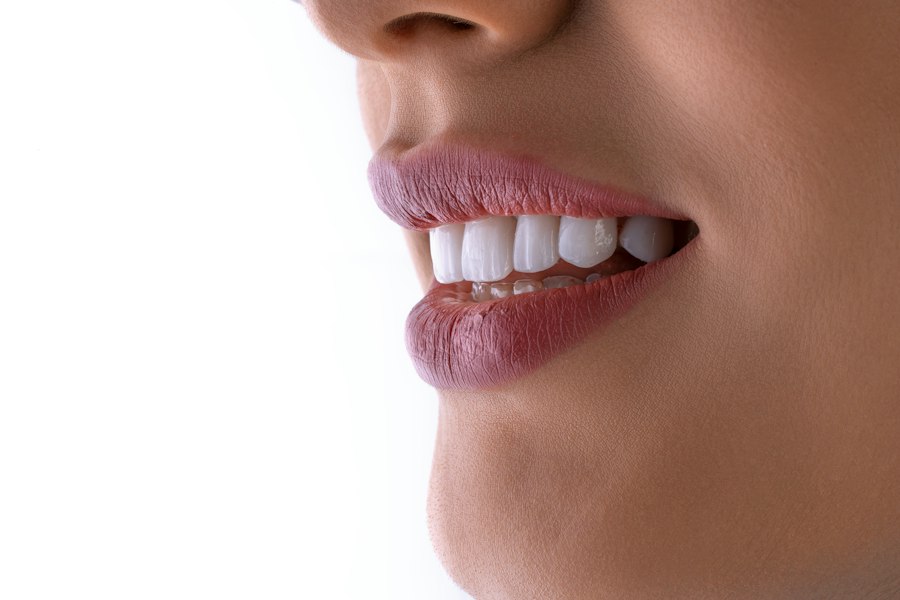 BeforeAfter
Questions patients ask
All-on-4 at Denture in Istanbul costs €4,200 per arch in 2026 and €8,400 for both arches. The price includes 4 Straumann® or Nobel Biocare® implants, a fixed temporary bridge, the final zirconia bridge, your hotel and airport transfers. A UK private clinic typically charges about £12,000 per arch for the same treatment.
No, not properly. Visit 1 (5 days) covers the surgery and a fixed temporary bridge. The implants then need 3–4 months to bond with the bone before the final zirconia bridge can be fitted in a 4-day second visit. A clinic offering a final bridge in one week is loading implants before they have healed.
All-on-4 supports a full-arch bridge on 4 implants, two upright and two tilted. All-on-6 uses 6 implants for more support. We recommend All-on-6 for upper jaws with soft bone, wide arches and heavy grinders. Your CT scan decides, not the price list. All-on-6 costs €5,400 per arch against €4,200 for All-on-4.
The implants are designed to last for life, and studies with 10–18 years of follow-up show around 93–98% still in place at 10 years. The zirconia bridge typically lasts 10–15 years or more and is remade on the same implants when it wears. Denture guarantees implants for life and bridges for 10 years, in writing.
Surgery is done under local anaesthetic, with IV sedation available, so you feel pressure but not pain. Afterwards expect swelling and a bruised feeling for 3–7 days, managed with ibuprofen and paracetamol. Most patients stop painkillers within 5 days. Fitting the temporary bridge on day 3 is uncomfortable rather than painful.
Soft food for 8–12 weeks: soups, eggs, fish, pasta, well-cooked vegetables and yoghurt. Avoid anything you have to bite into or tear, such as crusty bread, steak, nuts and raw apples. Once the final zirconia bridge is fitted you can eat normally, though we still advise against cracking nuts or ice with your teeth.
Yes, at a licensed clinic where a named implantologist plans the surgery on a CT scan and uses implant brands your home dentist can service. Denture is licensed by the Turkish Ministry of Health and ISO 9001 certified, places Straumann® and Nobel Biocare® implants through surgical guides, and gives a lifetime implant guarantee in writing.
Three to four days after surgery is safe for most patients, and visit 1 is planned around it: surgery on day 2, temporary bridge on day 3, checks on days 4–5, then home. Cabin pressure does not affect implants. Keep painkillers in your hand luggage, drink water and avoid alcohol on the flight.
Message your coordinator and a video review is arranged within 48 hours. A failed implant is replaced free under the lifetime guarantee, and remakes include your flights and hotel. During healing the temporary bridge is adapted to the remaining implants, or in rare cases you wear a denture for 2–3 months until the new implant has bonded.
Yes, provided the CT scan shows enough bone at the front of the jaw, roughly 5 mm wide and 8–10 mm high. Long-term denture wearers have usually lost bone at the back, which is exactly what the tilted implants in All-on-4 are designed to work around. If the front bone is also thin, a graft, All-on-6 or zygomatic implants are discussed.
Brush twice a day with a soft brush, run a water flosser along the gum line under the bridge, and thread superfloss under it once a day. See a hygienist every 6 months. Once a year a dentist unscrews the bridge, cleans it and checks each implant. We send your records to your own dentist or to a partner dentist near you.
Sources
- The All-on-4 treatment concept for the rehabilitation of the completely edentulous mandible: a longitudinal study with 10 to 18 years of follow-upMaló P. et al., Clinical Implant Dentistry and Related Research, 2019
- The all-on-four treatment concept: systematic reviewSoto-Peñaloza D. et al., Journal of Clinical and Experimental Dentistry, 2017
- The all-on-four treatment concept: a systematic reviewPatzelt S.B.M. et al., Clinical Implant Dentistry and Related Research, 2014
- All-on-4® treatment concept: clinical documentationNobel Biocare
- Dental treatment abroad: advice for patientsBritish Dental Association
- Going abroad for dental treatmentGeneral Dental Council (UK)