

How much do dental implants cost in Turkey, and are they safe?
A dental implant at Denture in Istanbul costs €550 including the abutment and a zirconia crown in 2026, against about £1,500 at a UK private clinic. Treatment takes two short trips of 3 and 5 days, with 3–6 months of healing in between. Every implant is a Straumann® or Nobel Biocare® placed with 3D-guided surgery, and comes with a lifetime guarantee in writing.
- Price
- €550 per implant + crown
- Time in Istanbul
- 2 trips: 3 + 5 days
- Guarantee
- Lifetime on the implant
- Brands
- Straumann®, Nobel Biocare®
- 10-year survival
- 95–98% in studies
- Pain
- Local anaesthetic, 2–3 sore days
Key takeaways
- An implant is a titanium screw that replaces the root of a missing tooth. Bone grows onto it over 3–6 months, then a crown is fixed on top. It is the only replacement that stops the jawbone shrinking.
- You need two visits. Surgery takes about 30 minutes per implant on the first trip; the crown is made and fitted on the second, once the implant has fused with the bone.
- Around 95–98% of implants are still in place after 10 years. Smoking, uncontrolled diabetes and untreated gum disease are the main reasons they fail.
- A quote should name the implant brand, include the abutment and crown, and be based on a CT scan. If any of those is missing, the price is not the price.
What is a dental implant and how does it work?
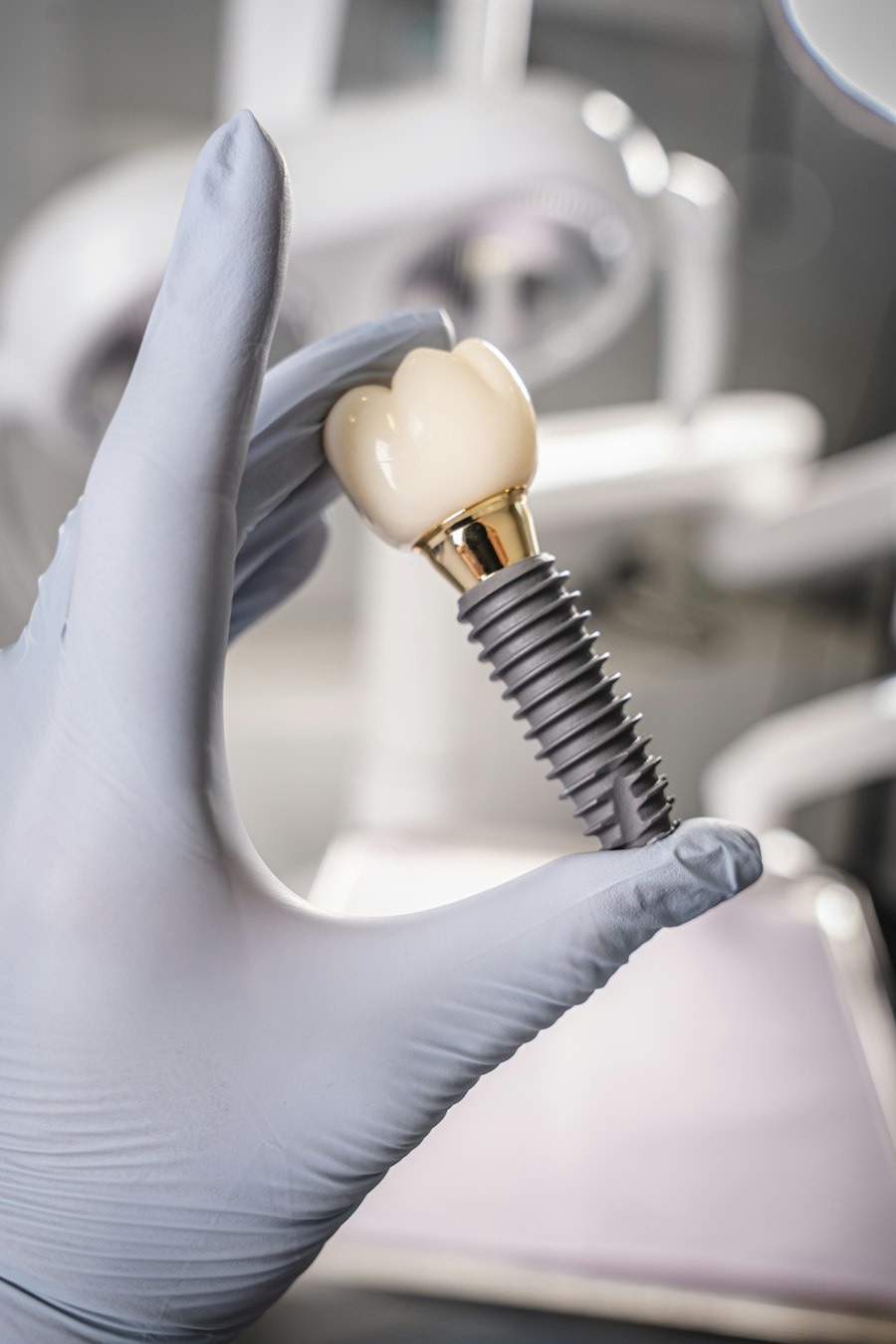
A dental implant is a titanium screw placed in the jawbone where a tooth root used to be. Over 3–6 months bone grows onto its surface, a process called osseointegration, until it is as firm as a natural root. A connector called an abutment is then fixed to the implant and a zirconia crown goes on top. You see only the crown.
A typical implant is 3.3–4.8 mm wide and 8–12 mm long. Modern surfaces such as Straumann's SLActive® are documented to reach stable bone contact in 3–4 weeks rather than 6–8,4 which is why the final crown can go on after about 3 months in the dense lower jaw and 4–6 months in the softer upper jaw.
Why replace a missing tooth at all? Bone under a gap shrinks fastest in the first year and keeps thinning, and neighbouring teeth tilt into the space. An implant loads the bone and slows the loss. A bridge fills the gap but means cutting down two healthy teeth; a denture does nothing for the bone.
Same-day teeth: immediate or delayed loading?
Immediate loading means fitting a temporary crown the day the implant is placed. It is safe when the implant is very firm (an insertion torque of 35 Ncm or more) and not under heavy chewing load, which in practice means front teeth. Delayed loading, waiting 3–6 months before any crown, is the default for back teeth and grafted sites, because loading too early is a common cause of early failure.
Straumann® vs Osstem® vs budget implant brands
The brand decides what happens in 10 or 20 years when a part needs replacing. Here is how the three options quoted in Turkey compare.
| Straumann® / Nobel Biocare®Usually our pick | Osstem® | Unknown budget brand | |
|---|---|---|---|
| Track record | Switzerland / Sweden, 40+ years, hundreds of 10-year+ studies | South Korea, 20+ years, dozens of 5–10 year studies | Often rebranded; few or no studies |
| Parts available at home | Yes, any implant dentist can order them | Yes, through most suppliers | Often not; a broken screw can mean a new implant |
| Guarantee at Denture | Lifetime, in writing | Lifetime, in writing | We do not place them |
| Price with abutment and crown | €550 | €400 | Often quoted lower, rarely itemised |
Choose a brand your home dentist can service. Straumann and Nobel Biocare are the safe default; Osstem is a well-documented way to lower the cost. We do not place unbranded implants at any price.
Are dental implants right for you?
Implants need enough healthy bone and a body that heals normally. We check both on your CT scan and medical history before we quote, and say so plainly if a bridge or denture would serve you better.
A good fit if you have
- One or more missing teeth, or teeth that cannot be saved
- Healthy gums, or treated and stable gum disease
- Enough jawbone, or bone that can be rebuilt with a graft
- Non-smoker, or able to stop 2 weeks before and 8 weeks after surgery
- Age 18 or over, with well-controlled diabetes if you have it
Better options if you have
- Heavy smoking you cannot pauseStop first; failure risk roughly doubles otherwise
- Intravenous bisphosphonates or similar bone drugsUsually not suitable; bridge or denture
- Active, untreated gum diseasePeriodontal treatment first, implants later
- Uncontrolled diabetes (HbA1c above 8%)Stabilise with your GP, then implants
- A whole jaw of failing teethAll-on-4 or All-on-6
Benefits and downsides of dental implants
Implants are the closest thing to a new tooth, but they mean surgery, months of healing and lifelong hygiene. Here is the balanced picture every patient hears before deciding.
Advantages
- Looks, feels and chews like a natural tooth
- Keeps the jawbone from shrinking where the tooth was lost
- Leaves the neighbouring teeth untouched, unlike a bridge
- Lifetime guarantee on the implant, 10 years on the crown, in writing
Things to know
- Surgery, 2–3 sore days, and 3–6 months of healing before the final crown
- Two trips to Istanbul, not one
- 2–5% of implants fail, mostly in the first months; smokers and diabetics are at higher risk
- Peri-implantitis, infection around the implant, affects roughly 1 in 5 patients long term
- A bone graft or sinus lift, if needed, adds cost and up to 6 months
Dental implants in Turkey: what the cheap quotes leave out
The gap between a UK implant fee and a Turkish one is real: £1,500 against €550 for the same Straumann® implant and crown. The gap between a Turkish quote and the final bill can be real too. 'Turkey teeth' stories are mostly about crowns on healthy teeth; implants have a different trap.
What a low quote often leaves out
- The crown and abutment. Many 'implant' prices cover only the screw; the rest is added later, sometimes doubling the figure.
- The brand. 'Premium Swiss implant' is not a brand. Ask for the name and, after surgery, the implant passport with the lot number.
- The CT scan. A quote from a photo cannot tell you whether you have enough bone. The graft is then 'discovered' on arrival, when you cannot walk away.
- The second trip. A permanent crown in 5 days on every implant means loading implants that should have been left to heal.
- Aftercare. A warranty without a named route home is a leaflet.
How we do it
Every price is per implant including abutment and zirconia crown, brand named, fixed in writing before you book, with any graft already in the plan. Every implant is planned on a 3D CT scan and placed through a printed surgical guide, so position, angle and depth are decided before the first cut. Your implant passport lists brand, size and lot number, and the lifetime guarantee covers flights and hotel if an implant ever fails. UK dental bodies say the same: see your own dentist first, get it in writing, know who provides aftercare.56
The implant process: two trips, 3 + 5 days
Bone needs time to heal around an implant, so treatment is split into a surgical trip and a crown trip, 3–6 months apart. Your plan and fixed price are agreed from your X-ray or CT scan before you fly.
- Trip 1 · Day 1
CT scan, final plan, surgical guide
Check-up, 3D CT scan and gum assessment. Implant positions are planned on screen and a surgical guide is 3D-printed in our lab overnight.
- Trip 1 · Day 2
Implant surgery
Under local anaesthetic, with sedation if you prefer, each implant goes in through the guide in 20–30 minutes. Front teeth in firm bone get a temporary crown the same day; otherwise a healing cap closes the gum.
- Trip 1 · Day 3
Check and fly home
Wound check, control X-ray and aftercare briefing. You fly that evening or the next morning, at least 48 hours after surgery. Stitches dissolve in 10–14 days.
- Home · 3–6 months
Healing (osseointegration)
Bone fuses to the implant: about 3 months in the lower jaw, 4–6 in the upper. Video reviews at 48 hours and 2 weeks. You eat normally on your other teeth.
- Trip 2 · Day 1–2
Scan and lab work
A stability test confirms the implant has fused. The healing cap comes off, a scan body goes on and your crown is designed. Our lab mills the abutment and zirconia crown overnight.
- Trip 2 · Day 3–5
Try-in, fit, warranty
Try-in on day 3 for shade and bite, final fitting on day 4 with the screw torqued to the manufacturer's value, and a last check on day 5 with your implant passport and warranty certificate.
How much do dental implants cost in Turkey? (2026 prices)
Prices include the abutment and crown and are fixed once quoted in writing. UK figures are typical private fees for comparison. Plans over €2,000 include a 4★ hotel and airport transfers; otherwise the hotel is €75 per night.
| Treatment | Denture | UK private | Includes |
|---|---|---|---|
| Straumann® / Nobel Biocare® implantincl. abutment + zirconia crownMost chosen | €550 | CT scan, guided surgery, passport | |
| Osstem® implantincl. abutment + crown | €400 | CT scan, guided surgery, passport | |
| Bone graftper site | €250 | Graft material, membrane | |
| Sinus liftper side | €350 | Graft material, follow-up CT | |
| Implant bridge · 3 teeth on 2 implantsone gap | €1,300 | 2 implants, 3-unit zirconia bridge | |
| 4 implants + 4 crownspackage | €2,200 | 4★ hotel, airport transfers |
Every implant plan includes
- Consultation, 3D CT scan and X-rays
- Digital planning and 3D-printed surgical guide
- Branded implant with passport, custom abutment, zirconia crown
- Video reviews at 48 hours and 2 weeks; lifetime implant guarantee
Will you need a bone graft or sinus lift?
Roughly one patient in four needs bone added before or during implant placement, depending on how long the tooth has been missing, where it was and why it was lost. Your CT scan answers this before you travel.
An implant needs at least 1–1.5 mm of bone on every side. A ridge that has been empty for years can thin to 4–5 mm, too narrow for a standard 4 mm implant, and in the upper back jaw the bone beneath the sinus can shrink to 3–4 mm.
Bone graft (€250 per site)
A bone graft adds granules of bone substitute, or a little of your own bone, under a membrane. Small grafts are done with the implant on the same day; larger ones first, with the implant 4–6 months later, which adds a trip.
Sinus lift (€350 per side)
A sinus lift raises the sinus floor and fills the space with graft so an implant fits in the upper back jaw. With 5 mm or more of bone it is done on the same day as the implant; with less, the implant follows about 6 months later. Afterwards, no hard nose-blowing for 2 weeks and no flight for 3–4 days.
A graft can often be avoided with a shorter or narrower implant, an angled implant that uses the bone you have (the idea behind All-on-4), or by placing the implant soon after extraction, before the bone shrinks.
Healing and aftercare: what to expect after you fly home
The first 3 days are the uncomfortable ones. After that most patients forget the implant is there until the second trip.
The first 2 weeks
- Pain: a dull ache controlled by ibuprofen and paracetamol together, usually for 2–3 days.
- Swelling and bruising: peak at 48–72 hours, then fade over a week. Ice in 15-minute bursts on day 1 helps.
- Bleeding: light oozing on day 1 is normal. No hard rinsing or straws.
- Eating: soft food for 7 days, chewing on the other side. No smoking for at least 2 weeks, ideally 8.
- Cleaning: chlorhexidine mouthwash for 10 days, then a soft brush on the healing cap. Stitches dissolve by day 10–14.
Message us the same day if pain worsens after day 3, swelling returns or there is pus, your lip or chin stays numb, a temporary crown feels loose, or you have a fever above 38 °C. We reply within about 10 minutes in opening hours, arrange a video review within 48 hours and, if you need to be seen, book a partner dentist in the UK, Germany or the Netherlands.
For the rest of your life
Implants do not decay, but the gum and bone around them can get infected. Peri-implantitis is the implant version of gum disease and affects roughly one patient in five in long-term studies.2 It is largely preventable: brush twice a day, clean between the implant and its neighbours daily with floss or an interdental brush, and see a hygienist every 6 months. Smokers get it more often and respond less well to treatment.3
How long do implants last, and what if one fails?
A well-placed implant in a well-cleaned mouth can last the rest of your life. In long-term studies around 95–98% of implants are still in place after 10 years, with most losses in the first year.1 The crown is a wear part: expect 10–15+ years before it needs replacing.
Why implants fail
- Early (first 3–6 months): the bone does not fuse, usually because of infection, movement, smoking or uncontrolled diabetes. Smokers lose implants at roughly twice the rate of non-smokers.3
- Late (years later): peri-implantitis eats away the supporting bone, or grinding without a night guard overloads the implant.
- Components: a loose screw or chipped crown. These are repairs, not failures, and far more common.
If your implant fails after you go home
- Message your coordinator with a photo; Dr. Aydın reviews you by video within 48 hours.
- A loose or infected implant is removed, a 15-minute procedure a partner dentist can do.
- The site heals for 2–3 months, sometimes with a small graft.
- We place a new implant free under the lifetime guarantee, including flights and hotel, then a new crown.
The conditions are printed on the certificate: a yearly check-up with a dentist or hygienist, and following the aftercare you were given. A chipped crown within 10 years is remade the same way.
Is it safe to get dental implants in Turkey?
Yes, at a licensed clinic with a named implantologist, a CT scan behind every plan and branded implants you can trace. Turkey has many well-trained implant surgeons, but standards between clinics vary more than in the UK, so the checks matter more than the country.56
What to check, and what we offer
- Licensing: Denture is licensed and audited by the Turkish Ministry of Health and certified to ISO 9001:2015.
- Who operates: Dr. Mert Aydın (DDS PhD, ITI Fellow) or Dr. Burak Şahin (DDS PhD, oral surgeon), named in your plan before you book.
- Planning and materials: a 3D CT scan and printed guide for every implant; Straumann®, Nobel Biocare® or Osstem® implants with the lot number on your passport.
- Aftercare at home: video reviews, partner dentists in the UK, Germany and the Netherlands, and a guarantee that includes travel.
The honest risks of surgery
- Nerve injury in the lower jaw can leave the lip or chin numb. With CT planning and a guide it is rare and usually temporary, but it is why we never place a lower implant from a 2D X-ray alone.
- Sinus perforation in the upper back jaw, usually small and self-healing.
- Infection in the first weeks, treated with antibiotics and, rarely, by removing the implant.
- Bleeding, more likely on blood thinners, which we plan around with your GP.
See your own dentist before you book anywhere; a UK check-up and a copy of your records make the Istanbul plan better informed.
Before & after
 BeforeAfter
Questions patients ask
At Denture in Istanbul a Straumann® or Nobel Biocare® implant costs €550 in 2026, including the abutment and a zirconia crown, against about £1,500 at a UK private clinic. An Osstem® implant with crown is €400. A bone graft adds €250 per site, a sinus lift €350 per side.
Yes, at a licensed clinic with a named implantologist, a CT scan behind every plan and branded implants you can trace. Check for Ministry of Health licensing, the brand in writing, a plan based on a 3D scan rather than a photo, a written lifetime guarantee and a clear route to aftercare at home.
Two. The first is 3 days: scan and planning on day 1, surgery on day 2, a check on day 3 before you fly. After 3–6 months of healing at home, the second is 5 days for the scan, try-in and fitting of your final zirconia crown. Front teeth can often have a temporary crown on trip 1.
Usually 4–7 months. Surgery takes 20–30 minutes per implant, but the bone needs about 3 months in the lower jaw and 4–6 months in the upper to fuse to it before the final crown is fitted. A large bone graft or sinus lift done first adds another 4–6 months.
Surgery is done under local anaesthetic, with sedation if you want it, so you feel pressure and vibration but no pain. Afterwards expect a dull ache and swelling for 2–3 days, controlled with ibuprofen and paracetamol. Most patients say it is easier than having the tooth taken out.
Yes. We ask for 48 hours between surgery and your flight, so most patients fly on the evening of day 3 or the next morning. Cabin pressure does not affect the implant. After a sinus lift we ask you to wait 3–4 days and to avoid blowing your nose hard for 2 weeks.
Message your coordinator with a photo. We arrange a video review within 48 hours and, if needed, a partner dentist in the UK, Germany or the Netherlands. A failed implant is removed, the site heals for 2–3 months, and we place a new one free under the lifetime guarantee, including flights and hotel.
Straumann® (Switzerland) and Nobel Biocare® (Sweden) as standard, and Osstem® (South Korea) as the economy option. All three have long published track records and parts available from any implant dentist in the UK and Europe. You receive an implant passport with the brand, size and lot number.
People under 18, whose jaws are still growing; heavy smokers who cannot stop around surgery; anyone on intravenous bisphosphonates or similar bone drugs; people with active, untreated gum disease; and those with uncontrolled diabetes or recent radiotherapy to the jaw. Most of these are 'not yet' rather than 'never'.
The implant itself can last for life. Long-term studies find around 95–98% of implants still in place after 10 years. The crown on top typically lasts 10–15 years or more before it needs replacing. Denture guarantees the implant for life and the crown for 10 years, in writing.
Sources
- Evaluation of survival and success rates of dental implants reported in longitudinal studies with a follow-up period of at least 10 years: a systematic reviewMoraschini V. et al., International Journal of Oral and Maxillofacial Surgery, 2015
- Peri-implant health and disease: a systematic review of current epidemiologyDerks J., Tomasi C., Journal of Clinical Periodontology, 2015
- Smoking and dental implants: a systematic review and meta-analysisChrcanovic B.R., Albrektsson T., Wennerberg A., Journal of Dentistry, 2015
- SLActive®: scientific evidenceInstitut Straumann AG
- Dental treatment abroad: advice for patientsBritish Dental Association
- Going abroad for dental treatmentGeneral Dental Council (UK)