
What are Turkey teeth, what went wrong and how do you avoid them?
“Turkey teeth” are full crowns fitted on healthy teeth, often sold as veneers, and they can remove up to about 72% of each visible tooth instead of 0.3–0.5 mm of enamel. The damage comes from over-treatment and rushed planning rather than from Turkey itself, and it is permanent: crowned teeth need crowns for life and some later need root canal treatment. You avoid it by insisting on X-rays, a tooth-by-tooth plan and a mock-up before any drilling, as set out in our E-max veneers guide.
- Veneer preparation
- 0.3–0.5 mm, front only
- Crown preparation
- 1–1.5 mm, all round
- The core problem
- Crowns on healthy teeth
- Reversible?
- No, only replaceable
- Veneers done well
- 5–7 days, one trip
- Before any drilling
- X-rays and a mock-up
Key takeaways
- “Turkey teeth” usually means crowns on healthy teeth, not veneers. A crown removes several times more tooth.
- Crowned teeth stay crowned for life, and some later need root canal treatment.
- Over-treatment happens in many countries, including the UK. Standards in Turkey vary a lot between clinics.
- Ask for X-rays, a plan naming each tooth as veneer, crown or untouched, and a mock-up before you agree to anything.
What are Turkey teeth?
Turkey teeth is a nickname for a cosmetic smile made by cutting healthy teeth down to small stumps and covering them with full crowns. The crowns are often bright white and uniformly square. The term spread on social media and in UK news coverage from around 2021, as young holidaymakers posted their new smiles.
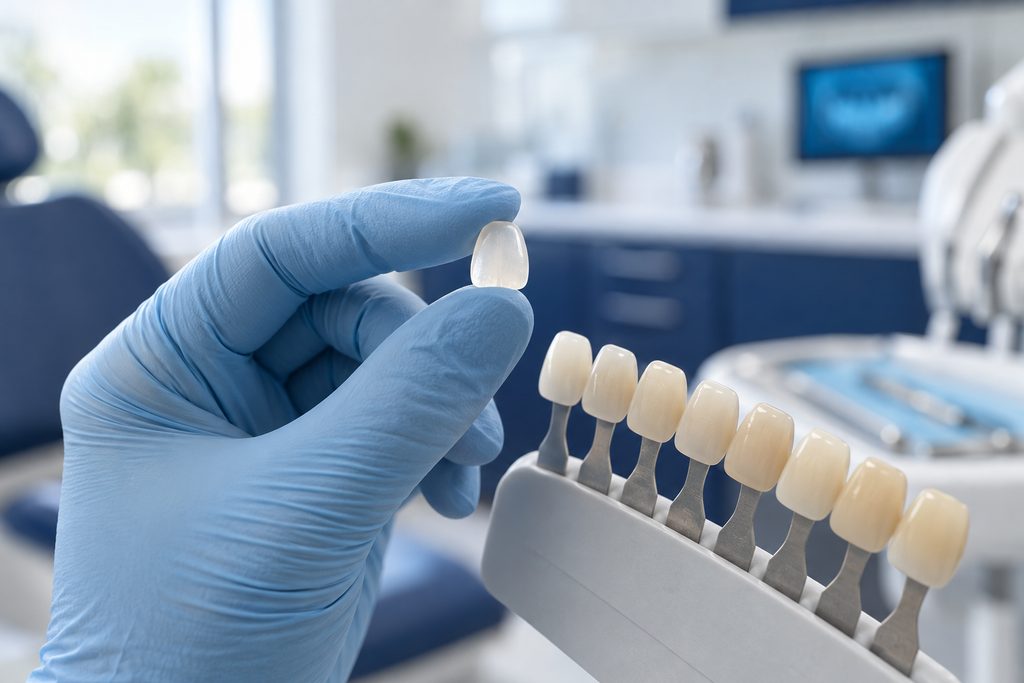
Many of these patients believed they had bought veneers. In most of the cases dentists described, the work was crowns: caps that cover the whole tooth.
Our E-max veneers treatment page shows what a conservative veneer plan looks like, and our Hollywood smile guide explains full makeovers of 16 or more teeth.
The nickname is unfair to many careful Turkish dentists, but the pattern was real.
Are Turkey teeth veneers or crowns?
Most of the cases that went viral were crowns, not veneers. The two look similar once fitted, but they remove very different amounts of tooth.
- A veneer is a thin ceramic shell bonded to the front surface. Preparation usually removes about 0.3–0.5 mm of enamel, and some cases need almost none.
- A crown covers the whole tooth. The dentist removes about 1–1.5 mm from every surface, leaving a tapered core.
A 2002 laboratory study on model front teeth found that veneer preparations removed roughly 3–30% of the visible tooth, while crown preparations removed roughly 63–72%.1 Much of what is removed is enamel, the hardest, most protective layer, and it never grows back.
Crowns are a good treatment for a tooth already broken down by decay, large fillings or cracks. They are rarely the right choice for a healthy front tooth that only needs a new colour or shape. For the full clinical decision, see our veneers vs crowns guide.
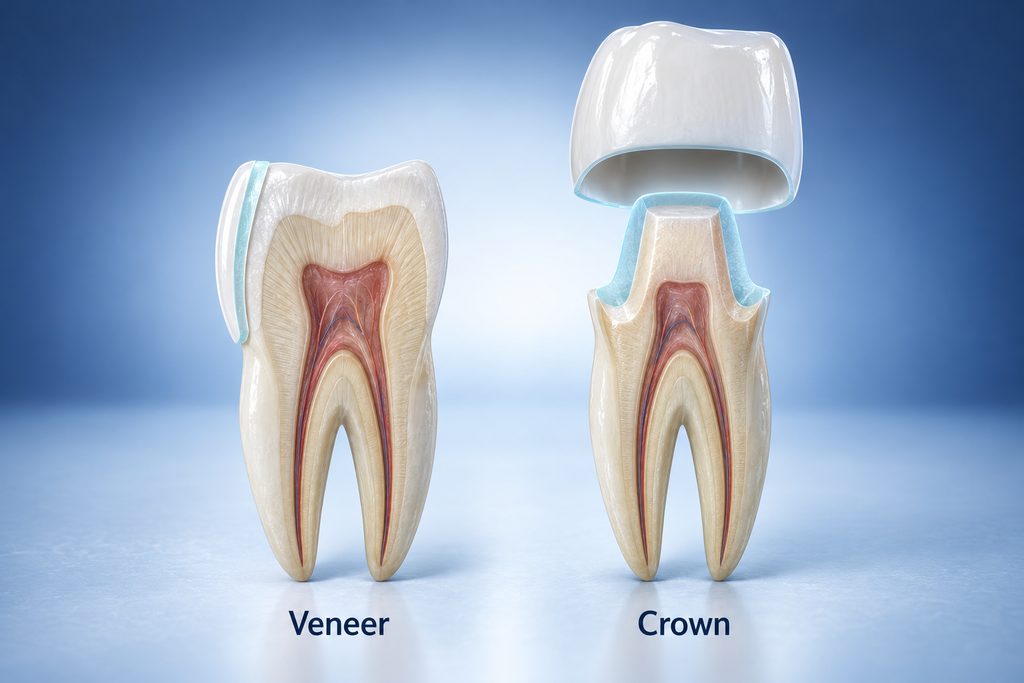
- 0.3–0.5 mmremoved for a veneerfront surface only
- 1–1.5 mmremoved for a crownon every side
- 63–72%of the visible toothremoved for a crown (2002 lab study)
- 5–7 daysfor veneersone trip, mock-up first
Why did so many Turkey teeth cases go wrong?
Many Turkey teeth cases went wrong because some clinics built a business around speed and volume, and crowns suit that model better than veneers.
- Crowns were swapped for veneers. Crowns hide every rotation, gap and colour difference, so they need less planning than thin veneers. Patients quoted for “veneers” received crowns, often without an explanation.
- Quotes came from selfies. A price for 20 units from phone photos skips X-rays, gum checks and a bite assessment.
- Everything happened in days. Preparing 16 to 24 teeth in one session, with no mock-up, leaves no room to change course.
- Sales came before diagnosis. Where agents earn commission per unit sold, the system rewards more teeth, not the right teeth.
- The look was chosen for the camera. Opaque white shades and long, square teeth photograph well but often look artificial in daylight.
In a British Dental Association survey, 86% of responding UK dentists had treated problems after treatment abroad, and crowns were named most often as needing follow-up work.5 For the wider picture, see our dentist’s risk check on dental work in Turkey.
What problems do Turkey teeth cause years later?
The main long-term problems are nerve damage, sensitivity, gum trouble and a lifelong cycle of replacements. Not every crowned tooth develops them, but the risk is higher than with a thin veneer.
Nerve damage. The pulp is the soft tissue in the centre of a tooth that contains its nerve and blood supply. Cutting a tooth down brings the surface closer to the pulp and can inflame it.
In a long-term study of 122 healthy teeth prepared for metal-ceramic crowns, the pulp had died in about 1 in 6 (15.6%) within 10 years.2 A tooth whose pulp dies usually needs root canal treatment, in which the inside of the tooth is cleaned and sealed, sometimes through the crown.3 It can happen without pain, so a check-up X-ray may be the first sign.
Sensitivity. Rushed preparation or poorly fitting temporaries can leave teeth sensitive to cold for weeks. Throbbing or night-time pain needs checking.
Gum problems. Bulky or poorly sealed crown edges at the gum line trap plaque, which can cause bleeding gums and, over time, gum disease and recession.4 A dark edge may then show above the crown.
A cycle of replacements. No crown lasts forever. Each replacement removes a little more tooth, and a heavily reduced tooth may eventually crack or need an implant.
Veneer, necessary crown or Turkey teeth crown: how do they compare?
Approximate figures; the percentages come from a laboratory study.1 Your own numbers depend on the tooth.
| Thin veneerOur default for healthy teeth | Crown on a damaged tooth | Crown on a healthy tooth | |
|---|---|---|---|
| Tooth removed | About 0.3–0.5 mm, front surface only | About 1–1.5 mm all round, much already lost | About 1–1.5 mm all round from a sound tooth |
| Share of visible tooth removed | Roughly 3–30% | Roughly 63–72%, partly decay or old fillings | Roughly 63–72% of healthy tooth |
| Risk to the pulp | Low, mostly within enamel | Higher, accepted to protect the tooth | Higher, with no clinical benefit |
| Can you go back later? | Usually re-veneered when replaced | No, it always needs a crown | No, it always needs a crown |
| Typical reason | Colour, shape, small gaps, worn edges | Large fillings, cracks, root-filled teeth | Speed, uniform look, high-volume sales |
| Price per tooth at Denture | €220–290 (E-max) | From €190 (zirconia) | Not offered |
A crown is a sound treatment for a damaged tooth. The problem behind Turkey teeth is not the crown itself but fitting one on a tooth that did not need it.
Can Turkey teeth be fixed?
Yes, the appearance and most problems can usually be improved, but the original teeth cannot be restored. A tooth cut down for a crown needs a crown for life. A careful dentist can usually:
- Treat pain and infection first, including root canal treatment where the pulp has died.
- Treat the gums with professional cleaning and better home care before any remake.
- Replace the crowns with a natural shade, sensible length and well-sealed edges, planned from a digital design and a trial in your mouth.
- Adjust the bite if the teeth hit too hard or your jaw aches.
The realistic goal is a better-made set of crowns on the same prepared teeth.
Remakes are rarely cheap. A UK private ceramic veneer costs about £950, and replacing 16 to 20 crowns, plus any root canal treatment, usually runs to many thousands of pounds. If crowns from abroad hurt, see a dentist promptly and take your X-rays, plan and material details.
How can you avoid getting Turkey teeth?
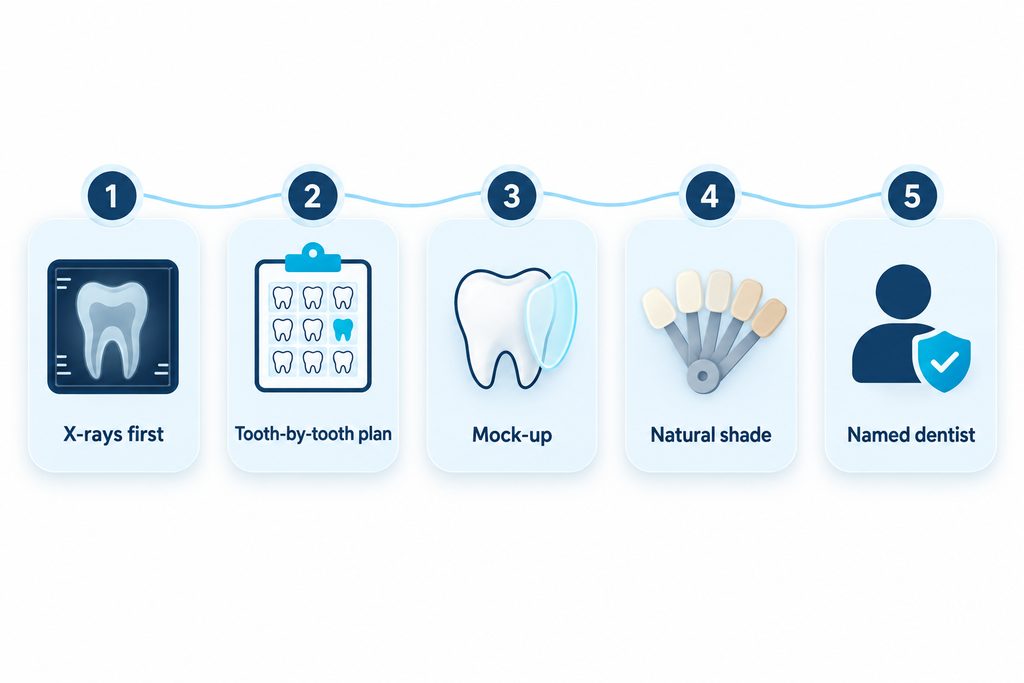
You avoid Turkey teeth by refusing to accept a price before a diagnosis and by seeing the result before any drilling. These five checks cover most of the risk anywhere.
- X-rays and a gum check first. Decay, old root fillings and gum disease change the plan, so a price without them is a guess.
- A tooth-by-tooth plan. Every tooth marked veneer, crown or untouched, with a reason for each crown. Our clinic policy is no crowns on healthy teeth.
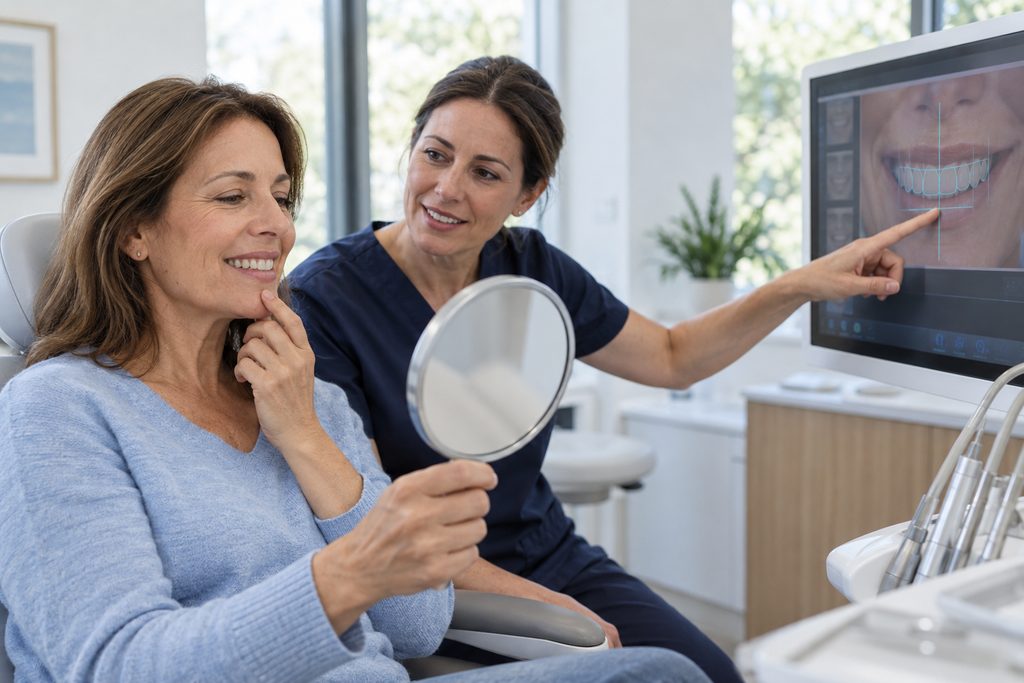
- A mock-up before drilling. A temporary resin copy of the new smile over your own teeth shows size and shape before anything is removed.
- A natural shade and size. Judge shades against your skin in daylight. The whitest tab on the guide rarely suits an adult face.
- A named dentist and a plan for home. Know who prepares your teeth, their specialty, and who you contact once you fly back.
To verify the dentist, see our guide to checking a Turkish dentist’s licence.
Questions to ask before you pay a deposit for veneers
A careful clinic answers every question in writing.
Should you travel for veneers at all?
Be honest about which column you are in.
A good fit if you have
- Healthy gums and no untreated decay
- Teeth that are discoloured, chipped, worn or slightly uneven
- Small gaps you would like closed
- Realistic hopes for a natural shade and shape
- Time for one 5 to 7 day trip and a check-up at home
Better options if you have
- Crowded or rotated teethAligners first, then fewer or no veneers (see our Invisalign treatment page)
- Bleeding gums or untreated gum diseaseGum treatment at home before any cosmetic work
- Teeth that are only yellowProfessional whitening
- One chipped toothComposite bonding with your local dentist
- Heavy grinding or uncontrolled diabetesGet assessed and stable first
Many people who ask for 20 veneers have crowded or rotated teeth. Straightening them first often means fewer or thinner veneers, or none, and that is as conservative as cosmetic dentistry gets.
Does over-treatment only happen in Turkey?
No, over-treatment such as crowns on healthy teeth, rushed cosmetic plans and pushy sales also happens in the UK and across Europe. Turkey became the symbol because of the number of young patients and the photos they shared.
What differs is your protection. The General Dental Council can investigate dentists on the UK register, but it cannot guarantee that a regulator like it exists in other countries.6 Abroad, your safeguards are the clinic’s licence, the dentist’s qualifications, a written plan and a warranty.
Standards in Turkey vary a lot. Licensed clinics with specialists and honest plans sit alongside high-volume operations that sell by the unit. Our pillar guide to dental treatment in Turkey covers costs, travel and how to compare clinics.
What should you do next?
Start with a diagnosis at home, then compare written plans rather than prices.
- See your local dentist for a check-up. Ask for copies of recent X-rays and whether your gums are healthy enough for cosmetic work.
- Learn what a conservative plan includes. Our veneers treatment page shows E-max veneers from €220 per tooth, and the Hollywood smile page explains the 16-veneer plan at €3,840.
- Ask for an itemised plan. Send photos for a free plan; a specialist replies within 24 hours with a fixed price.
- Check any quote against the questions above. If a clinic will not mark each tooth or offer a mock-up, keep looking.
- Already have crowns that hurt? See a dentist near you promptly, with your records.

Frequently asked questions
It is a nickname for very white, uniform smiles made by cutting healthy teeth down and covering them with full crowns. The name comes from viral posts by people treated in Turkey, but the same over-treatment happens elsewhere.
Usually crowns, even when patients were told they were getting veneers. A veneer removes about 0.3–0.5 mm of enamel from the front only, while a crown needs about 1–1.5 mm removed from every side.
Yes, the look and most problems can usually be improved with new crowns, gum treatment and root canal treatment where needed. You cannot remove the crowns and go back to your natural teeth, because most of the enamel has gone.
The most common are teeth whose nerve dies and needs root canal treatment, sensitivity, inflamed gums around bulky crown edges, and receding gums that expose the crown edges. Each crown will also need replacing one day.
It depends on the number of teeth and whether root canal treatment is needed. A UK private ceramic veneer costs about £950, and replacing a full set of 16 to 20 crowns usually runs to many thousands of pounds.
The NHS can treat pain, infection and clinically necessary problems, such as a root canal, if you can get an NHS appointment. Replacing crowns only to improve their appearance is cosmetic and is usually private.
Ask for a written plan that names each tooth as a veneer, a crown or untouched. Be wary of plans that only say “units”, prices from selfies without X-rays, and no mock-up before drilling.
No. Well-planned veneers remove only about 0.3–0.5 mm of enamel from the front of the tooth, and some need almost none. The damage linked to Turkey teeth comes mainly from full crowns on healthy teeth.
Many were made in the brightest shade, longer and squarer than natural teeth, because that photographs well. A natural result uses a shade and size that suit your face and age.
Sources
- Tooth structure removal associated with various preparation designs for anterior teeth (Edelhoff D, Sorensen JA), Journal of Prosthetic Dentistry 87(5): 503–509Journal of Prosthetic Dentistry, 2002
- Fate of vital pulps beneath a metal-ceramic crown or a bridge retainer (Cheung GSP, Lai SCN, Ng RPY), International Endodontic Journal 38(8): 521–530International Endodontic Journal, 2005
- Root canal treatmentNHS (UK)
- Gum diseaseNHS (UK)
- UK dentists picking up the pieces from dental tourism boom (member survey)British Dental Association
- Going abroad for dental treatmentGeneral Dental Council (UK)