
Is it worth getting dental treatment in Turkey?
For larger treatments, usually yes. Implants, crowns and veneers in Turkey typically cost 50–70% less than private treatment in the UK, Ireland or Western Europe, even after flights and a hotel. The trade-off is that you need to choose the clinic carefully, plan for one or two trips, and arrange aftercare at home. Done well, with a qualified specialist and a written plan, the results are the same as at home.
- Typical saving
- 50–70% vs UK/IE private
- Flight from London
- About 4 hours
- Time needed
- 3–7 days per trip
- Implants
- 2 trips, 3–6 months apart
- Visa (UK, EU)
- None for stays up to 90 days
- Worth it from
- About €1,500 of treatment
Key takeaways
- Turkey is cheaper because salaries, rent and lab costs are lower, not because the implants or materials are different. Ask for brand names in writing.
- The biggest risk is not the country but the clinic: over-treatment (crowns on healthy teeth), rushed timelines and no aftercare.
- Small treatments (one filling, one crown) are rarely worth the trip. Savings start to outweigh travel costs from roughly €1,500 of treatment.
- Get an itemised, per-tooth plan and a written guarantee before you book, and know who will fix problems once you are home.
Why so many people go to Turkey for dental treatment
Dental tourism means travelling to another country for dental treatment, usually to save money or to be treated sooner. Turkey has become one of the most popular destinations in the world for dental treatment, alongside Hungary, Poland and Spain. Every year hundreds of thousands of patients travel there, the largest groups coming from the UK, Germany, the Netherlands, Ireland and France.
The reasons are simple. Private dentistry at home is expensive, waiting lists for NHS and public dental care can be long, and implants or cosmetic work are rarely covered by public systems or insurance. Turkey offers modern clinics, short flights from most European airports, and treatment at a fraction of the price.
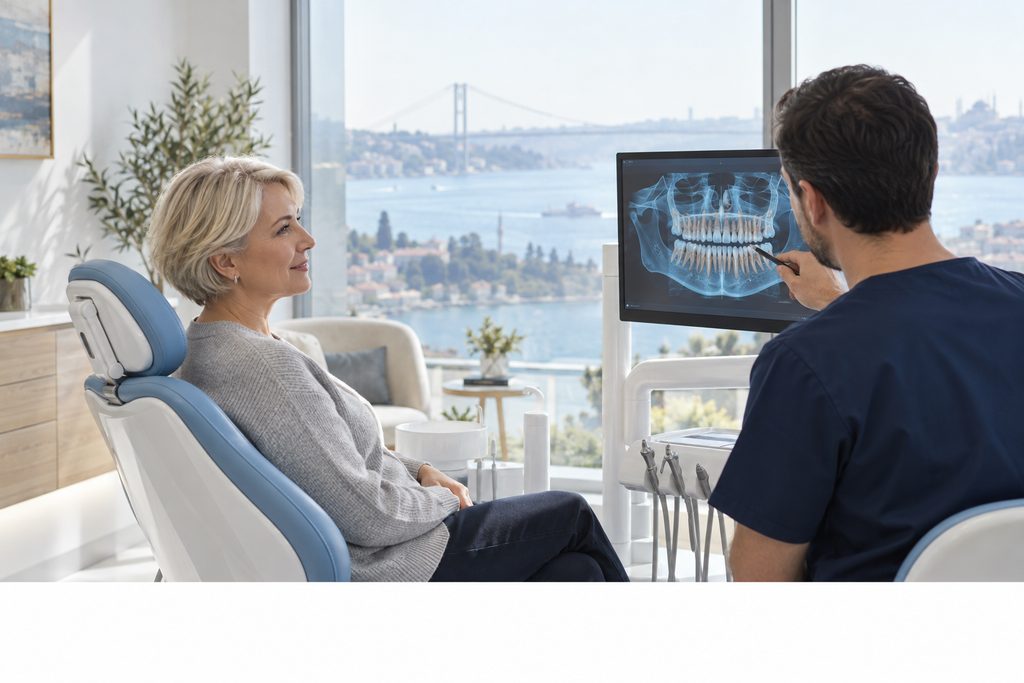
Price is not the only factor. Many Turkish clinics are built specifically for international patients: in-house labs that make crowns and veneers in days rather than weeks, coordinators who speak your language, and packages that include the hotel and airport transfers. That is why a treatment that takes several months of appointments at home can often be done in one or two short trips.

- 50–70%typical savingvs UK private fees
- ~4 hflightLondon, Dublin, Amsterdam, Paris
- 5 daysfor veneersin one trip
- 0visas neededUK, IE, DE, NL, FR, up to 90 days
How much does dental treatment cost in Turkey compared with home?
Indicative 2026 private prices. Turkish prices are Denture's; home prices are typical private-clinic fees and vary by city and clinic. Public schemes such as the NHS rarely fund implants or cosmetic veneers.
| Turkey (Denture)Our 2026 prices | United Kingdom | Ireland | Germany | Netherlands | |
|---|---|---|---|---|---|
| Dental implant + crown | €550–750 | £2,000–3,000 | €2,000–3,000 | €1,800–3,000 | €1,800–2,600 |
| All-on-4, one arch | €4,200–5,500 | £12,000–18,000 | €12,000–18,000 | €10,000–16,000 | €10,000–15,000 |
| E-max veneer, per tooth | €220–290 | £600–1,100 | €700–1,200 | €600–1,100 | €600–1,000 |
| Zirconia crown, per tooth | €190–260 | £500–1,000 | €700–1,100 | €500–1,000 | €500–900 |
| Invisalign®, full case | €1,450–1,900 | £3,000–5,000 | €3,500–5,500 | €3,000–5,000 | €3,000–4,500 |
| Laser whitening | €180 | £300–600 | €350–600 | €300–600 | €300–550 |
These are like-for-like figures for the same brands and materials. If a Turkish quote is far below ours, ask which implant brand, which lab and which dentist: the difference is usually there.
Why is dental treatment cheaper in Turkey?
A dental implant made by Straumann or Nobel Biocare costs a Turkish clinic almost exactly what it costs a clinic in London or Dublin. The difference is everything around it.
- Salaries and rent are much lower. A dentist, nurse and receptionist in Istanbul cost a fraction of their equivalents in London, Dublin or Amsterdam.
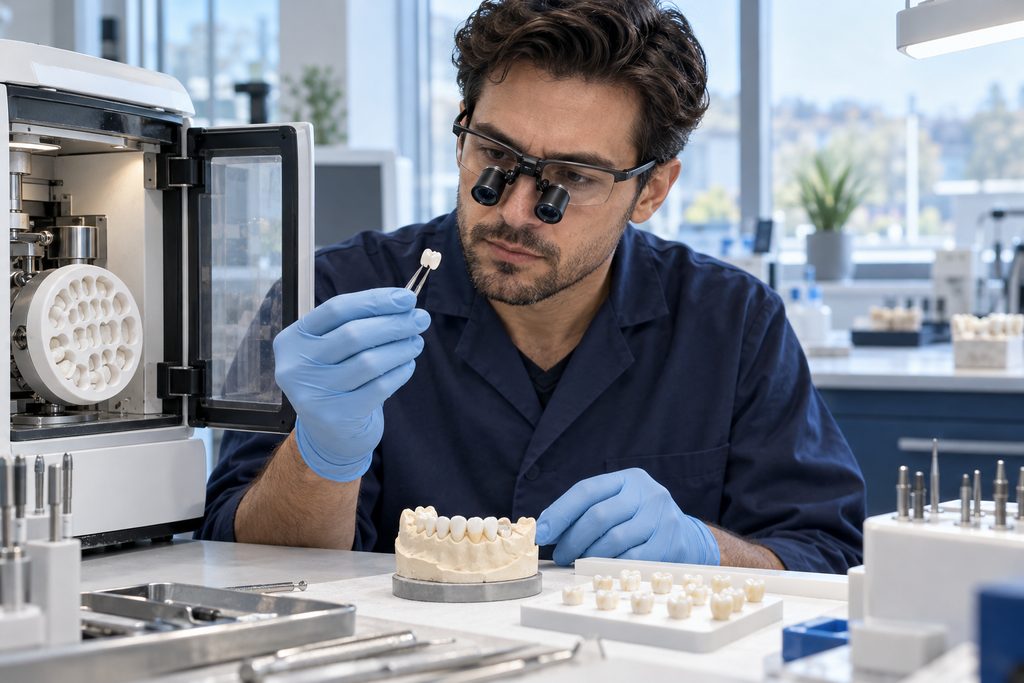
- In-house laboratories. Many clinics make crowns and veneers on site, removing a separate lab's margin and the shipping time.
- Volume. Clinics that treat many international patients buy materials in bulk and keep surgeons busy every day.
- Exchange rates. The Turkish lira has weakened against the euro and pound for years, which lowers local costs.
What should not be cheaper is the implant itself, the quality of the ceramic, or the time a dentist spends planning your case. If a price looks too good, one of those is usually where the saving comes from.
Our guide to what a cheap implant quote leaves out shows where low prices usually hide the difference.
Is dental treatment in Turkey safe?
Yes, at a well-run, licensed clinic with qualified specialists, dental treatment in Turkey is as safe as at home. Turkish dentists train for five years at university, specialists for three to four more, and clinics are licensed and inspected by the Turkish Ministry of Health.4
The problems you may have read about usually come from a minority of clinics that put volume before care. UK dental organisations have warned about patients returning with complications, most often from aggressive treatment rather than infection or poor hygiene.23 The most common issues are:
- Over-treatment: healthy teeth filed down for crowns when veneers, whitening or nothing at all would have been better. This is behind most 'Turkey teeth' stories.
- Rushed timelines: implants loaded before the bone has healed, or a full mouth done in a few days without proper planning.
- No aftercare: nobody to call when a crown loosens or a gum becomes sore after you fly home.
None of these is unique to Turkey, and all of them can be avoided by choosing the clinic carefully. The checklist below is what we would use ourselves.
For a fuller risk check, read is dental work in Turkey safe?, and use our guide to checking a Turkish dentist’s licence before you pay a deposit.
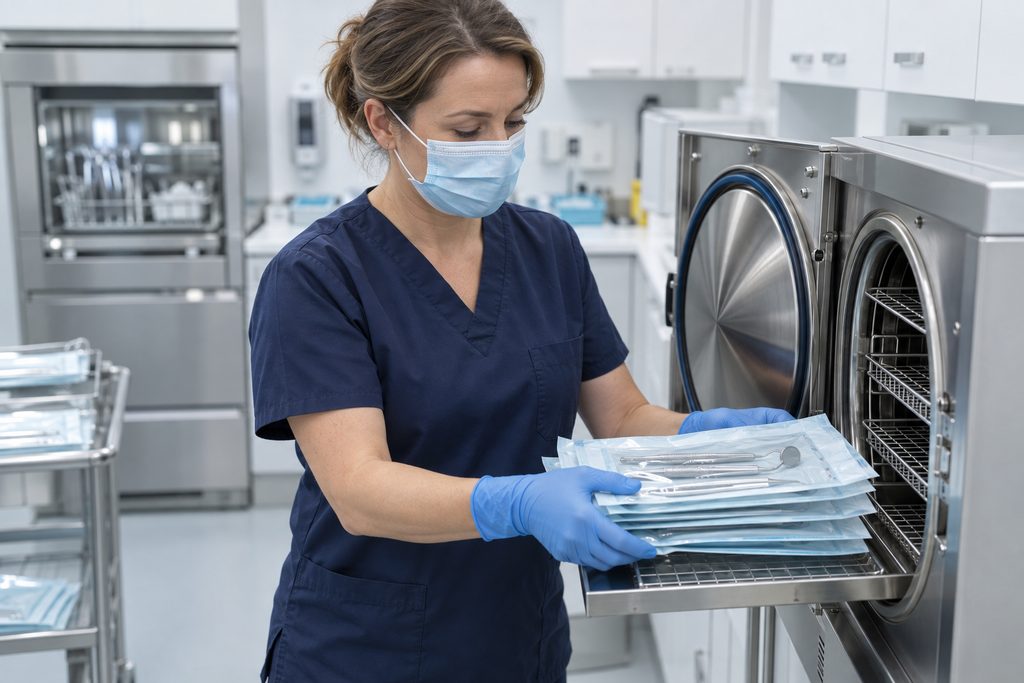
The country matters far less than the clinic. A good Turkish clinic and a good British clinic use the same implants, the same ceramics and the same protocols. The difference is the price and the trip.
How to choose a dental clinic in Turkey: 10 checks
Work through these before you pay a deposit anywhere. A good clinic will answer every one without hesitation.
How long do you need to stay in Turkey?
Treatment times depend on what you need and how your mouth heals. These are typical for healthy patients.
| Trip 1 | Gap | Trip 2 | Total time away | |
|---|---|---|---|---|
| Crowns | 3–5 days | None | None | 3–5 days |
| Veneers | 5–7 days | None | None | 5–7 days |
| Teeth whitening | 1 day | None | None | 1–2 days |
| Dental implants | About 3 days (surgery) | 3–6 months healing | About 5 days (crowns) | About 8 days |
| All-on-4 / All-on-6 | About 5 days (fixed temporary teeth) | 3–4 months | About 4 days (final bridge) | About 9 days |
| Invisalign® | 2 days | Monitored from home | Optional | 2 days |
Be wary of clinics that promise permanent implant crowns in a single week for everyone. Some cases allow immediate loading, but most need months of healing first.
Planning your trip, step by step
This is how a typical trip works with us, from the first message to aftercare at home.
- Weeks before
Send photos or an X-ray
A specialist reviews your case and sends an itemised plan, a fixed price and a day-by-day schedule. Ask every question now.
- Booking
Choose dates and book flights
Avoid booking non-refundable flights until your plan is confirmed. Allow an extra day for implants in case healing needs it.
- In Istanbul
Treatment and recovery
Appointments are usually a few hours a day, with free time in between. Bring soft foods, painkillers you know, and comfortable clothes.
- At home
Aftercare and check-ups
Video check-ups, your records sent to your local dentist, and a clear plan for what to do if anything feels wrong.
Travel practicalities for UK and European patients
Do I need a visa?
British, Irish, German, Dutch and French citizens can currently visit Turkey for tourism without a visa for up to 90 days in any 180-day period. German, Dutch and French citizens can also travel on a national ID card. Rules can change, so check your government's travel advice before you book.5
How long are the flights?
- London to Istanbul: about 3 h 45 min
- Dublin: about 4 h 15 min
- Amsterdam: about 3 h 30 min
- Frankfurt: about 3 h
- Paris: about 3 h 30 min
Istanbul has two airports: Istanbul Airport (IST) on the European side and Sabiha Gökçen (SAW) on the Asian side. Most clinics, including ours, are closer to IST, so check before you book.
When is the best time to go?
Spring (April–June) and autumn (September–November) are mild and quieter. Summer is hot and busy; winter is cheaper but can be cold and wet. Treatment itself works the same all year.
Can I fly after treatment?
After veneers, crowns or whitening, yes, the same or next day. After implant surgery most patients fly within one to two days, but after a sinus lift or bone graft your surgeon may ask you to wait longer because of pressure changes in the cabin. Ask for written advice before you book your return.
Travel insurance
Standard travel insurance usually does not cover planned medical or dental treatment abroad, or complications from it. Look for a policy that specifically covers medical travel, or check what the clinic's guarantee includes.

Pros and cons of dental treatment in Turkey
A balanced summary of what we tell every patient before they decide.
Advantages
- Savings of 50–70% on implants, crowns and veneers
- Treatment done in one or two trips instead of months of appointments
- Modern clinics, 3D scanning and in-house labs
- No waiting lists
- The chance to recover somewhere interesting
Things to know
- You need time off work and, for implants, two trips
- Quality varies between clinics, so research is essential
- Problems after you return can be harder to fix
- Your home dentist may be reluctant to adjust work done elsewhere
- Travel insurance rarely covers planned treatment
What happens if something goes wrong when you are home?
This is the question that matters most, and the one many patients forget to ask. Small issues are common with any dental work: a crown that feels high, a sore gum, sensitivity for a few weeks. Rarely, something more serious happens, such as an implant that fails to integrate.
- Contact the clinic first. A good clinic offers a video consultation within a day or two and tells you whether it can wait or needs attention.
- Use a partner dentist if there is one. Some clinics work with dentists in the UK and Europe who can see you locally.
- Check your guarantee. Know in advance whether remakes include your flights and hotel, and how many years each treatment is covered for.
- Keep your records. Ask for your X-rays, scans, implant brand and batch numbers. Any dentist will need them.
- In an emergency, such as swelling, fever or uncontrolled bleeding, see a local dentist or emergency service straight away.
The UK General Dental Council cannot investigate complaints about dentists working abroad, so your protection comes from the clinic's guarantee and how seriously it takes aftercare.3

Our honest verdict
For implants, All-on-4, crowns and veneers, dental treatment in Turkey can save you thousands with results that match good clinics at home, if you choose carefully. For small treatments, or if you cannot travel twice for implants, staying at home is often the better choice.
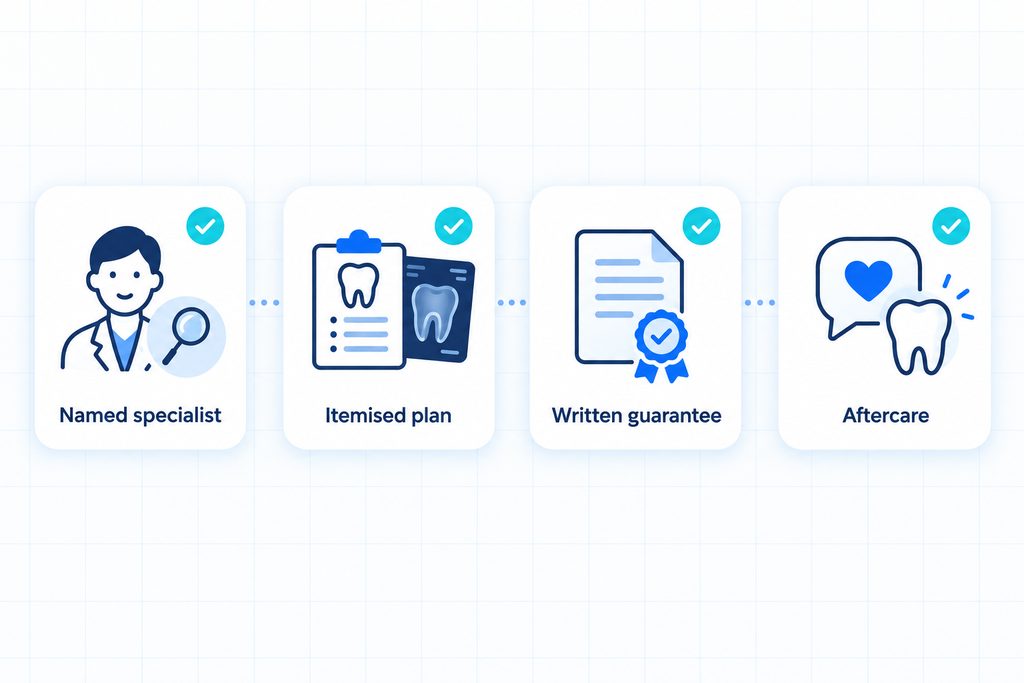
Whichever clinic you choose, insist on a named specialist, an itemised plan based on X-rays, a written guarantee and a clear aftercare plan. If a clinic hesitates on any of those, keep looking.
Frequently asked questions
Typically 50–70% compared with private treatment in the UK, Ireland or Western Europe, after flights and a hotel. For example, a dental implant with a crown costs around €550–750 in Turkey against £2,000–3,000 privately in the UK.
Yes, at a clinic licensed by the Turkish Ministry of Health with qualified specialists, a written plan based on X-rays, named implant brands and a written guarantee. Most problems come from over-treatment or poor aftercare at a minority of clinics, not from the country itself.
Lower salaries, rent and laboratory costs, plus a weaker lira. The implants and ceramics used by good clinics are the same international brands as at home and cost the clinic about the same.
Crowns take 3–5 days and veneers 5–7 days, in one trip. Implants usually need two trips: about 3 days for surgery, then about 5 days for the final crowns 3–6 months later. Whitening takes a day.
British, Irish, German, Dutch and French citizens can currently visit Turkey without a visa for up to 90 days in any 180-day period. Check your government's latest travel advice before booking.
A social media term for very white, oversized teeth, usually full crowns placed on healthy teeth that were filed down. It describes a type of over-treatment, not dental work in Turkey in general. Ask for veneers or whitening where your teeth are healthy.
Most will see you, especially in an emergency, but some are reluctant to adjust work done elsewhere and will charge for it. Bring your X-rays, implant brands and batch numbers, and choose a clinic with partner dentists or a guarantee that covers travel for remakes.
Usually not. Standard travel insurance excludes planned medical or dental treatment and its complications. Look for specialist medical-travel insurance and check what the clinic's own guarantee covers.
Rarely. Flights, a hotel and time off usually cancel out the saving on a single small treatment. Dental travel starts to make financial sense from roughly €1,500 of treatment.
Most patients fly within one to two days of implant surgery. After a sinus lift or bone graft, surgeons often advise waiting longer because of cabin pressure. Ask your surgeon for written advice before booking your return flight.
Sources
- Going abroad for dental treatmentNHS (UK)
- Dental tourism: advice for patients considering treatment abroadBritish Dental Association
- Considering dental treatment abroad?General Dental Council (UK)
- Health tourism regulation and licensed healthcare facilitiesRepublic of Türkiye Ministry of Health
- Foreign travel advice: Turkey, entry requirementsGOV.UK
- Dental treatment abroadOral Health Foundation (UK)